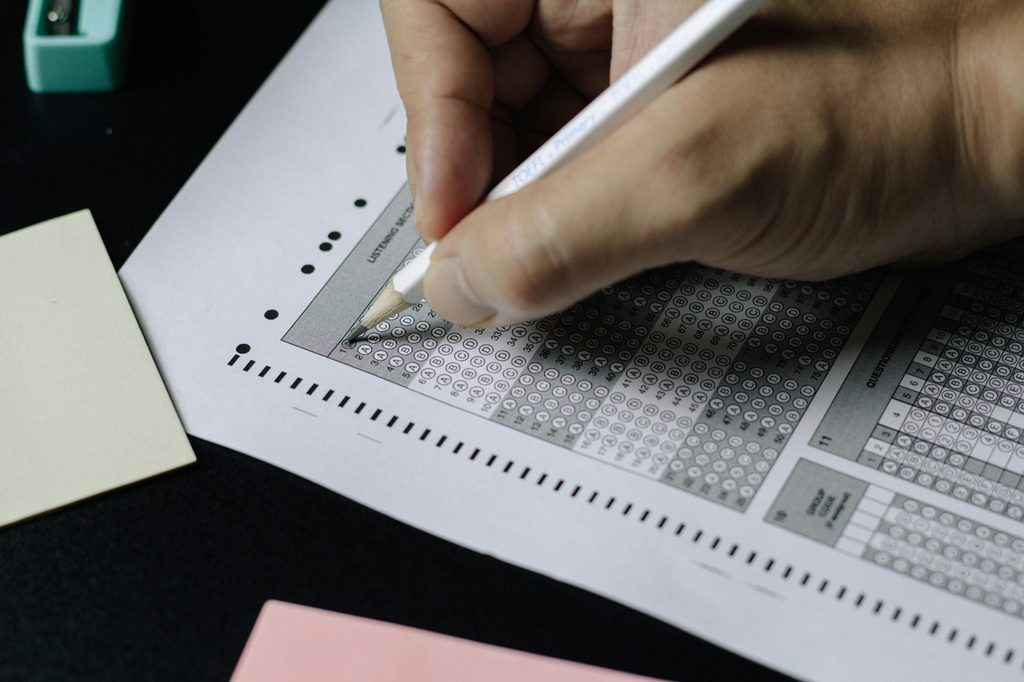
What is the Reason University Exams are Challenging for Certain Students?

the Reason University Exams are Challenging for Certain Students

The university exam is an exercise in problem-solving which is usually conducted in the semester of summer exams.

Retaking options are accessible to every student, the achievement is impacted by the wide inequality that limits the access to these opportunities.

When a student fails an exam They often feel embarrassed. They are obsessed with the notion that they have be more focused or manage their time better so that they can get back in the game and achieve success.

But this method is not going to modify the core of the matter. Academic resilience, the capacity to overcome and prevent challenges in school is directly connected to happiness. Particularly vulnerable students are afflicted with cognitive issues as a result of this type of manipulation that can affect their health.

If they place too much emphasis on the individual’s success it is possible that they will be able to predict which students will be able to go back for more as well as who will not.

Unhealthy Behavior

If they have a steady home, financial assistance from their family members as well as a secure education environment, they are able to be confident about their future in education.

In addition, youngsters are faced with different challenges. Many have to be on the clock for overtime in order to pay their the cost of living, whereas others don’t have the motivation or time ability to dedicate themselves to their education due to family commitments like the cost of paying rent.

Based on recent studies, the majority of teenagers have jobs to earn money and 26% of them support their family members. Students who are required to mix the demands of their education with working might be in a position of disadvantage when compared with financially secure students.

The feeling of isolation from society and being lonely are also significant elements. Students are more likely to return home or quit campus for the summer, which reduces their chances of interacting with other students. Retaking the exam can lead to an unresolved communication issue, which can be an inability to pass. It can also increase the sensation of feeling overwhelmed.

A sense of community extends far beyond the individual experience. It is formed by the schools’ culture as well as the accessibility to support services for academics. Students who do not participate within this community are likely to become frustrated, and lose their academic identity completely.

The summer months can leave students without time to focus. Particularly for students with caring parental responsibilities such as parents.

The stress of taking exams may cause stress and anger for students who are unhappy with their academic achievements. It can cause fear for family members and financial assistance. The threat to career goals. or feeling angry. Life.

Students who are struggling with academics tend to leave colleges. So, a re-examination of the student is not just a simple review. The experience was emotionally exhausting event for all who was involved.

Assistance to All Students

University programs often help students help students improve their test and learning capabilities. But, students require additional types of help in the event of struggling with their studies.

According to studies those who are attempting to take revisit exams would appreciate clarity in their instruction and an opportunity to increase their confidence.

One of the results of our partnership with the University was the development of an “reassessment plan.” While the creation of these plans may result in extra work for teachers it’s not always simple. Support for students who have retaken exams is usually uniform and fair.

Students require personalized and proactive help to be able to change to their situation. Universities need to provide feedback on tests fail, and afterward offer feedback. This feedback could be given with a personalized service for students to better understand it and apply it. The extent of how schools are able to help to promote equality in the workplace remains a mystery.

Students who want to expand their enrollment often focus on access, but not taking into account how they will assist students during an emergency.

The gap in graduation – when certain populations have a higher chance of earning the degree of a bachelor than other. Students with a minority background and people of color particularly. If institutions are committed to justice and respect for the supremacy of the law, they ought to be able accomplish this.
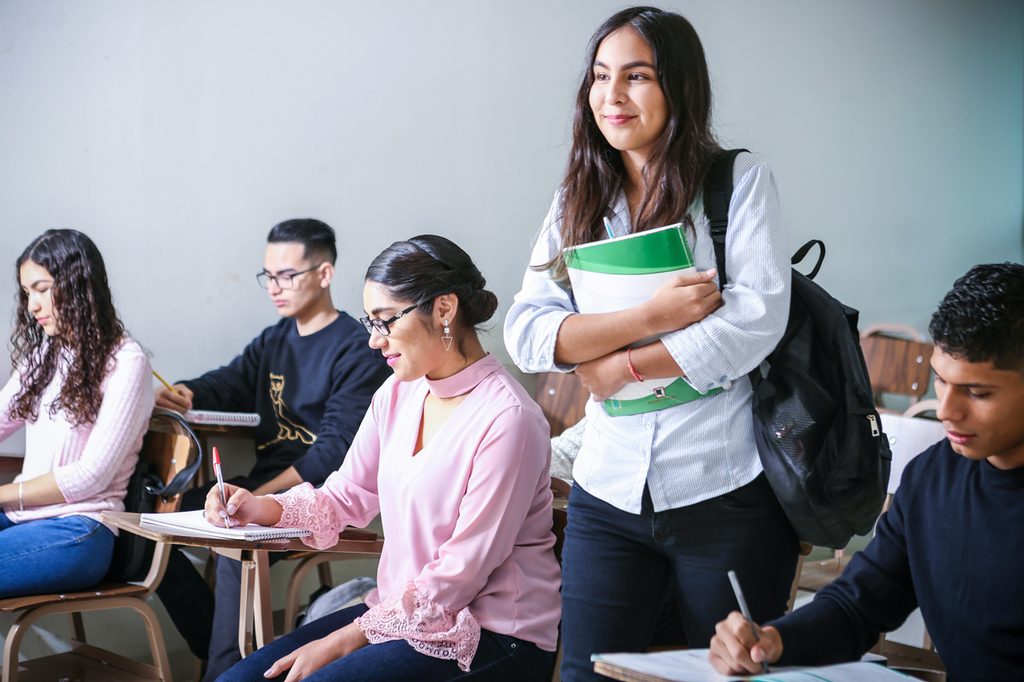

University students run the possibility of being reduced to an understanding level that is the same in high school

University students run the possibility of being reduced to same level like in high school

Universities compete for the satisfaction of students and rise up the ranks, we are at risk of compromising the standard of education at universities. There’s a big distinction between modern and traditional educational policies of institutions and the actual practices in seminars and lecture halls.

When universities put too much importance on the individual satisfaction of students and satisfaction, they could end up becoming institutions that focus more on academic issues and are much more like high school instead of places to foster the development of critical analysis. In keeping with Yates”the words of Yates”: universities education needs to stop filling up tanks with students and begin to burn the tank by burning.

Higher education institutions often measure the success of their institutions using various indicators such as the quality of staff relationships, graduation rates as well as student retention rates and satisfaction. Concerns regarding foreign students, which stem from the government’s worries regarding “exams”, teaching time can be utilized to enrol students into every class, since “exams” have become a important topic.

A professor in a university setting with the goal of improving the learning of students, I think that students select a subject since they’re genuinely interested and eager to take part in the process of learning. But, as a instructor, I have distinct expectations of the roles of the staff member, the magnitude of their workload and how much money is that are paid.

There’s More Than Just Time to Communicate

The expense of higher education has spawned a society in which parents and students believe they’re entitled to no other education than higher. This is a result of false government policies, like reductions in the budget for the program for internships and belief that university staff is the sole responsible party to supervise internships. When students do not succeed their internships, they, as well as faculty and staff at universities are held accountable for the failure.

One good indicator of this is how much time spent in communication between students and staff. Students and their community are of the opinion that more interaction results in higher grades. However, in the experience of me, I think that the reverse is true. A lot of contact can create an environment of dependence where teachers are merely filling this “container” with students during the week of the set schedule, instead of encouraging an authentic and high-quality individual learning. Teachers are guides, advocates and lighthouses in this process of learning.

The length of time for contact may differ depending on the course however in my experiences in the field of environmental planning, each student that exceeds 20 hours of interaction each week is a decrease in learning time as well as a wider range of educational possibilities as a result, the requirement for an assessment schedule decreases because of the shorter amount of time spent with students.

This method fosters a student-focused environment where different courses compete to get students’ attention Therefore, it might be better to skip the long-winding multiple-choice examinations in favour simple essays of only 2,000-3500 pages.

Studies on Learning by Students

However, the performance assessment process contributes to the problem and can compromise the quality of instruction. Evaluation of student performance during the course is not a reliable measure of the quality of instruction The staff see the course as a goal, a goal that doesn’t allow enough individual failures as students move throughout the course.

In addition, we have the National Student Satisfaction Survey, that asks students in their final year (excluding doctoral students) to rate their satisfaction with the classes they took throughout their final year. This creates additional motivation for students to strive for more success. Feel free to take the survey from here: https://bisadepo5k.com

Personally, I was a participant in the program for urban planning with a satisfaction score of 76 percent in 2012, 100% in 2013 and 76% in 2014.

Some Thing is Related to Self-Study

Over the last 30 years, in the field of education and trainer, I have witnessed firsthand the ways that leaders in organizational change are able to assist in learning. It is imperative to break this cycle and tackle the serious implications. A suggestion would be to think of educators as personal trainers within the gym. Clients (students and employees) are charged a minimal amount, and the profits or loss is entirely dependent on the teachers, and there no external factors in charge of the processes or results the conferences that are organized by these instructors encouraged experimentation and research. We need to implement a better peer-assessment system to provide clear, rapid feedback–effectively replenishing the reservoir–rather than relying solely on feedback from students focused on academic skills for use in degree programs.

Afraid of losing control, norms and models appear just to help keep students in the hands of our teachers instead of encouraging students to take part in real educational learning.

In fostering critical thinking we’ll help students adjust to the ever-changing reality of working life as self-aware executives and independent thinkers who will be manager and leaders for the next few years.

Students who concentrate solely on their studies might have a difficult time finding work after graduation

Students who concentrate on their studies might have a difficult time finding work

Ernst & Young was one among the very first employers for college graduates to recognize that their hiring criteria are more trustworthy than CVs. However, this was only recently an issue for large accounting firms like PwC as well as Deloitte.

The Global University Employability Survey, released in September of 2015 It shows that the importance of an education that is high quality decreases for employers however, work outside of the university is also being ignored as only 10% of European employers have mentioned work outside of universities in the recruitment process.

The findings are starkly different from our studies on social enterprise for students at universities in the UK and is defined by the combination of creative and social ventures in business.

In the course of our study as part of our research, we surveyed 150 British students who participate with social work in other settings to discuss their experiences. A lot of them see these positions not as a substitute to an education program, however, they also offer opportunities for employment opportunities in the future.

Ranking Positive Skills

Based on the Global University Employment Survey, one of the top requirements for employers in hiring are the skills of candidates. Over half of European employers agree that special skills like creative leadership, teamwork as well as interpersonal and design is essential.

Enactus is the world’s social enterprise organization that has witnessed a phenomenal increase of undergraduate enrollment over the past few times. It is evident in particular at Southampton My university as well as to Sheffield and Nottingham which have seen memberships nearly tripled or doubled within just 5 years.

Social impact firms like students centers provide opportunities for volunteers to get involved and give back to their communities. They also have specialist organizations, such as pioneer engineers who carry out engineering services for the public good.

This change could be due to the increased consciousness of environmental and social issues among students. However it is evident that students are making better choices regarding how to spend the time they are not in class. Students are beginning to understand what extracurricular activities can help their productivity – usually through the development of abilities or broadening their network those that won’t.

The decision was made resulted from the close connections which some students’ companies have developed with companies like KPMG, Deloitte, Waitrose and Barclays. Students from firms that sponsor adult graduates provide college students with real-world abilities to communicate.

The social enterprise field will reveal the skills graduates appreciate but feel they do not have. Employers frequently highlight their creativity as well as teamwork and resilience as crucial qualities to be innovative in the technology industry. They are skills which will allow future generations to succeed in the workforce of today and assure their success in the workplace.

The entrepreneurial spirit outside of the academic realm allows students to expand their perspectives. With the competitive job market and where posting resumes can be not as effective networking is vital and provides the chance to show relevant skills and abilities.

Giving Students Individualized Support is Essential

For hiring, employers value the skills of their employees over their degrees. So, universities need to differentiate from different forms of employment. The definition of employment isn’t only limited to students who are employed following their education and must cover the knowledge, skills as well as socioeconomic aspects, and are based on the perception that employment is necessary instead of an option that is exclusive. The universities should not be limited in the options they provide students. Instead they should assist them to get ready for jobs that they are interested in and also ensure the stability of their workforce and ensuring that they have opportunities in the informal economy.

However, the system at universities is still averse to short-term opportunities for employment instead of the longer-term development which is essential for students’ futures. Therefore, the emphasis remains upon the amount of graduates that find employment within the first six months after graduation instead of the way their studies contribute to acquiring the skills that will be useful throughout their career professions.

Our study shows that students are looking for opportunities to build their networks and skills by participating in extracurricular activities. However, many do not make the most of these opportunities, which is the reason European employers aren’t viewing them as essential.

Higher education institutions must integrate the building of interpersonal and social abilities in their curriculum to provide an environment that is safe for students that do not compromise their academic progress. Of course, there are simple and less invasive methods to accomplish this, without putting too much pressure on teachers or their duties.

However the universities need to realize that routines are not sufficient and the task must be treated with seriousness and must not taken for granted.